
Soil Testing
Soil testing in Brisbane is essential for safe and durable construction of residential buildings, extensions, decks, and pools. Accurate site classification ensures foundations are designed to suit the soil conditions, reducing the risk of ground movement, cracking, and structural issues.
SNG Engineers provides professional soil testing services across Brisbane, in compliance with AS 2870 – Residential Slabs and Footings. Early soil testing can help identify reactive soils and problem sites, saving time and costs before construction begins.
Soil Test Procedure
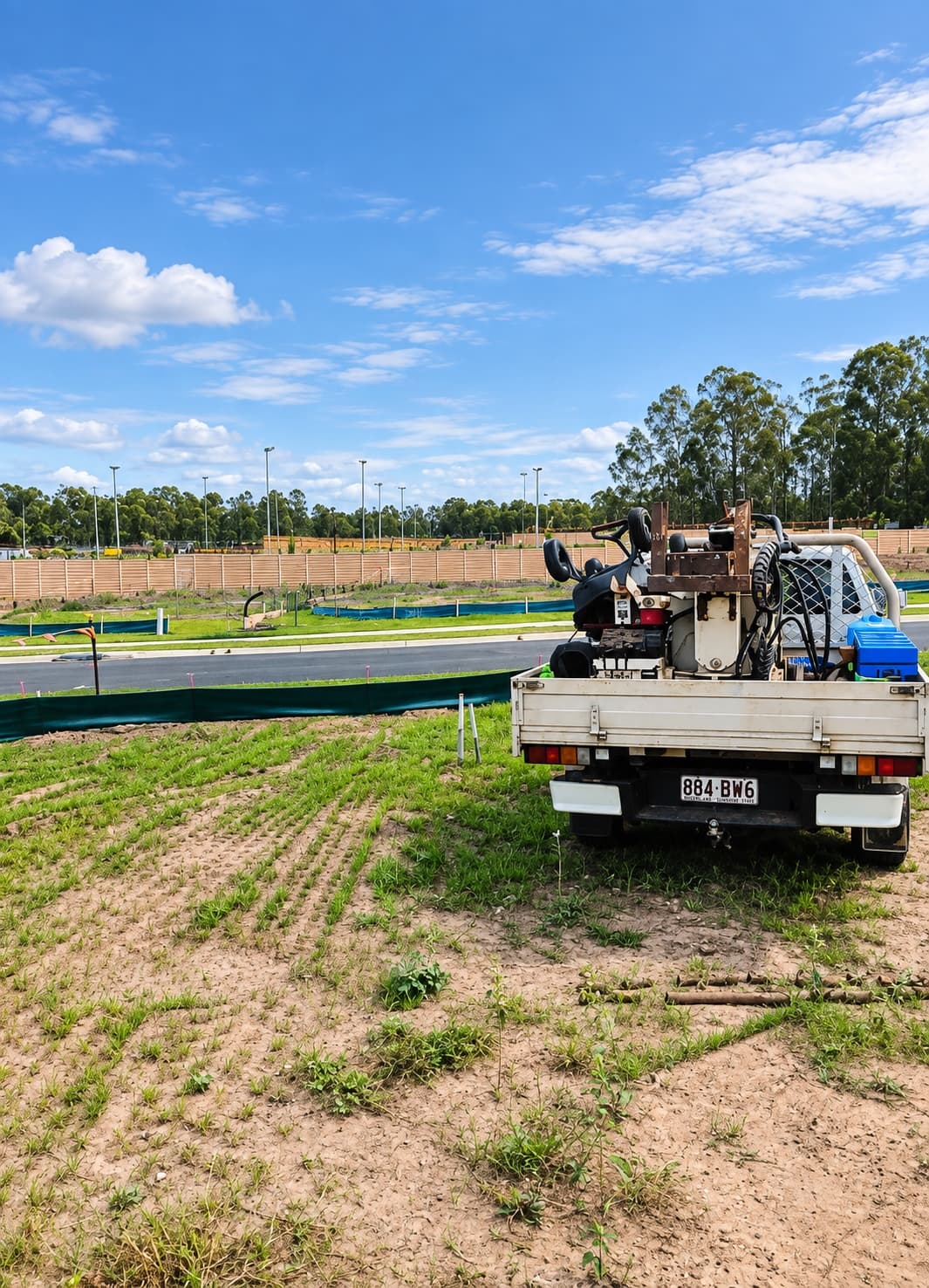
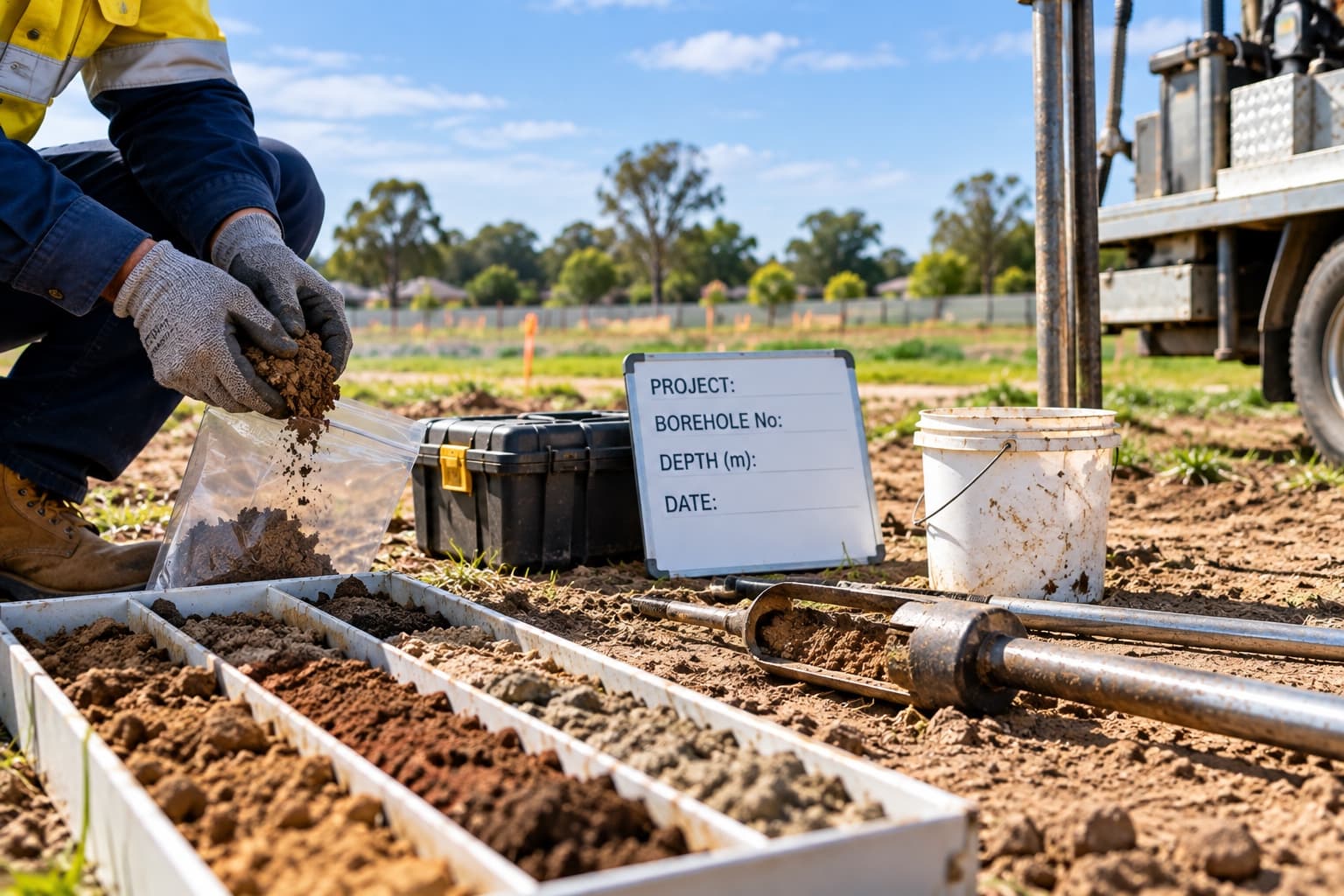
We conduct thorough soil investigations in Brisbane using a minimum of two boreholes drilled to 2 meters, with testing carried out using a Dynamic Cone Penetrometer (DCP) or Pocket Penetrometer.
- Soil samples collected for laboratory analysis to determine reactivity and bearing capacity
- Site conditions recorded — groundwater, drainage, slope, vegetation, and fill
- Detailed soil report prepared to support foundation design
DCP vs Pocket Penetrometer — What's the Difference?
Both tests give an indication of soil strength, but they work differently and are used for different situations.
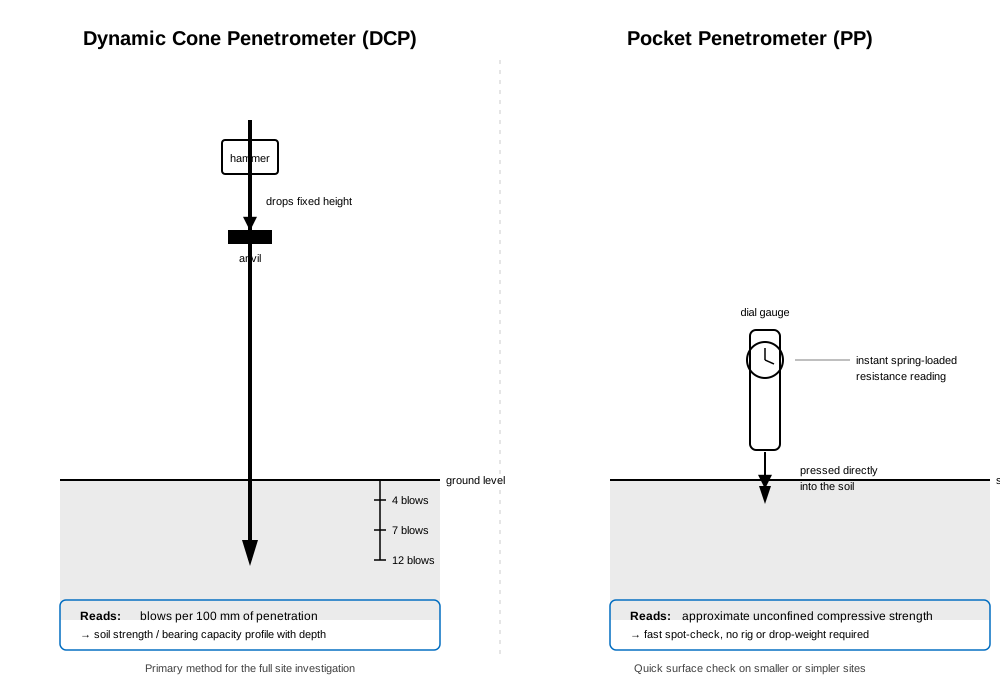
- Dynamic Cone Penetrometer (DCP) — a weight is dropped a fixed height down a guide rod onto an anvil, driving a cone into the ground. The number of blows needed to advance each 100 mm of depth is logged, building a strength profile down the borehole. This is our primary method for a full site investigation, since it tests how the soil changes with depth, not just at the surface.
- Pocket Penetrometer (PP) — a small handheld spring-loaded gauge pressed directly into the soil or a collected sample, giving an instant, approximate reading of unconfined compressive strength. It's faster and less invasive than a DCP, so we use it for quick spot-checks or on smaller, simpler sites where a full DCP investigation isn't warranted.
Why Soil Testing Matters
Queensland's clay-heavy soils are some of the most reactive in Australia — they expand when wet and shrink when dry, and that movement is transferred straight into whatever's built on top of them. A footing or slab designed without knowing the soil's actual reactivity is essentially a guess, and guessing wrong on a foundation is expensive to fix after the fact.
Skipping soil testing (or relying on a neighbouring property's old report) risks under-designed footings that crack, doors and windows that stick as the slab moves, and — in the worst cases — a full footing redesign mid-construction once a problem is discovered on site. A DCP or borehole investigation before design starts is the cheapest insurance against all of that.
Soil Testing Services in Brisbane
SNG Engineers offers expert soil testing services in Brisbane for:
- New Homes
- Extensions and Additions
- Decks
- Raise and Build-Under Projects
- Retaining Walls
- Swimming Pools
- CBR Sampling
SNG Engineer's soil reports provide clear, reliable information to support safe, cost-effective, and compliant foundation design, helping Brisbane homeowners and builders make informed construction decisions.
Frequently Asked Questions
How much does soil testing cost in Brisbane?
Cost depends on the site — access, number of boreholes required, and whether it's a standalone soil test or bundled with site classification. Get in touch with your site address and project type for an accurate quote.
How long does a soil test take, and when do I get the report?
The site investigation itself is usually completed within a day. The written soil report, including laboratory analysis of collected samples, typically follows within a few business days.
Do I need a new soil test if my neighbour already had one done?
No — soil conditions can vary significantly even between adjoining blocks due to fill, drainage, and local ground disturbance. Council and certifiers require a soil report specific to your site, not a neighbouring property's.
Is soil testing required for a small project like a deck or a shed?
It depends on the structure and council requirements, but even smaller structures built on reactive soil can experience movement without an appropriate footing design. It's worth checking before you finalise footing details, especially on sites with known reactive clay.
What's the difference between soil testing and site classification?
Soil testing is the on-site investigation and lab analysis; site classification (per AS 2870) is the resulting rating — Class A through Class P — that tells your engineer or builder how much ground movement to design for. See our dedicated Site Classification page for the full class breakdown.