
Piling Design & Engineering
In residential construction, the foundation is critical for the stability and longevity of a building. While shallow foundations, such as concrete slabs, are commonly used, they may not provide adequate support if the near-surface soil is weak, unstable, or obstructed by underground services. In such situations, piling is employed as a deep foundation solution to transfer structural loads to more competent soil or rock at greater depths.
At SNG Engineers, we provide comprehensive design and documentation for residential and commercial piling. Our team assesses each site's conditions and determines the most appropriate piling solution, specifying the type, size, and location of piles required. This ensures the long-term stability and structural integrity of your property.
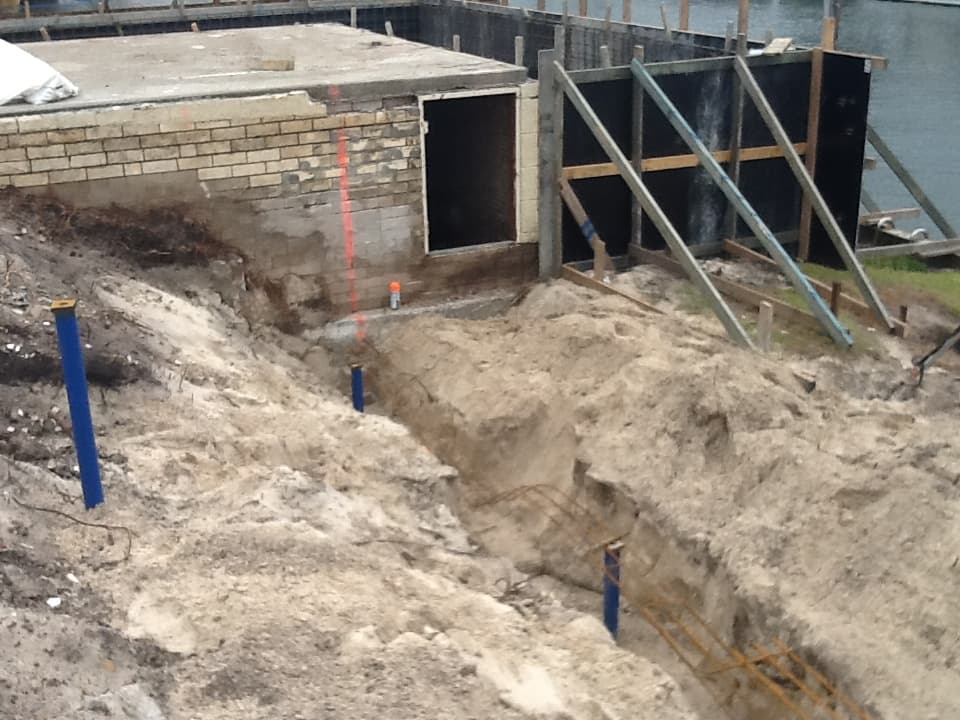
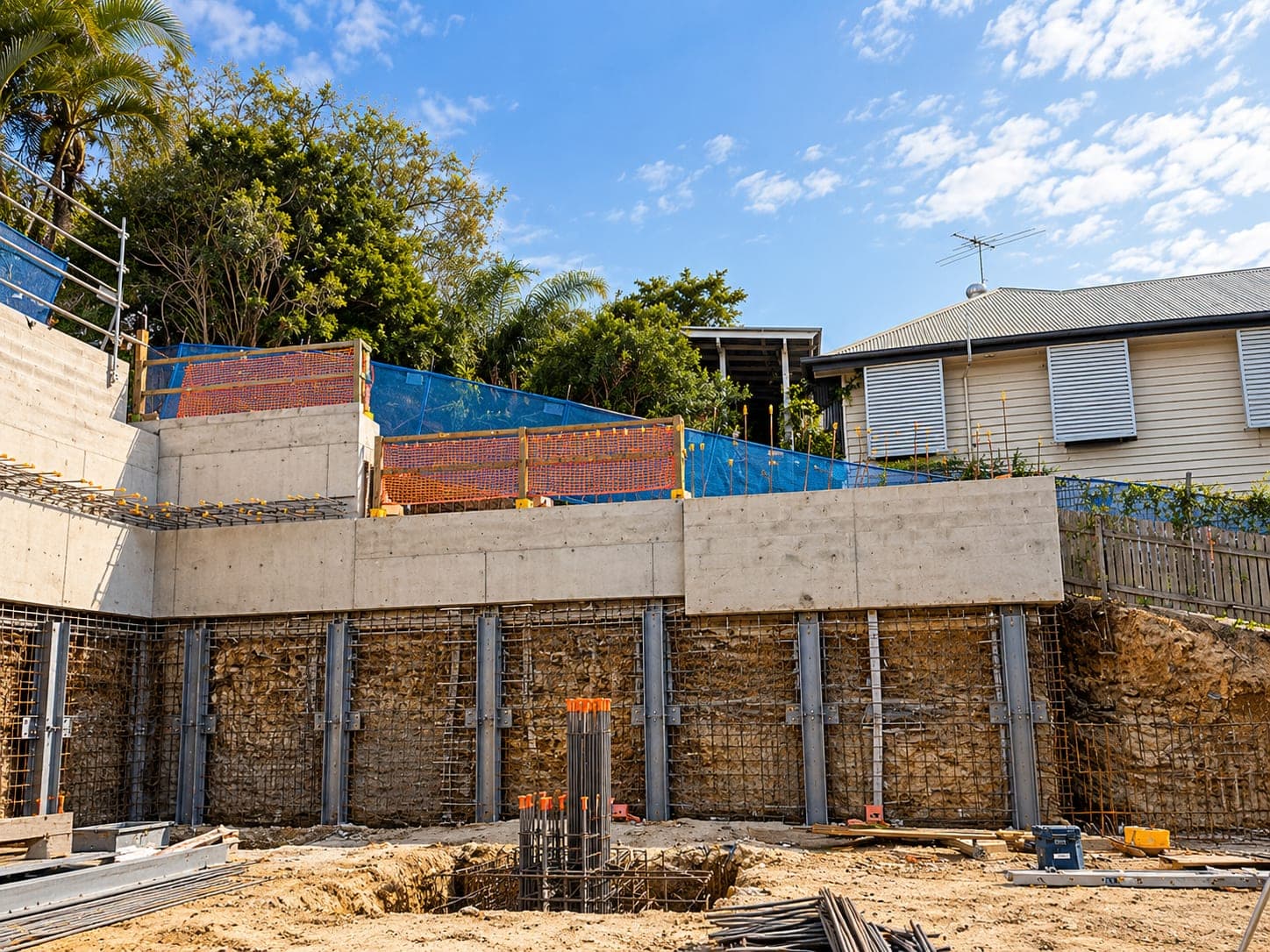
There are several types of piles, including
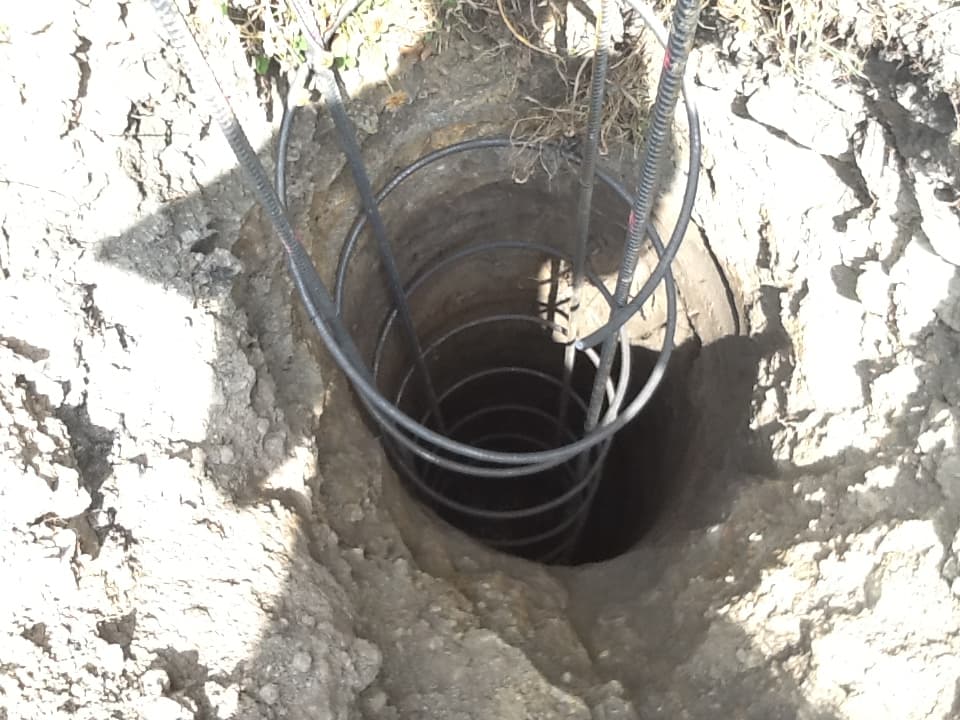
Concrete bored piles
Drilled holes filled with reinforced concrete.
Screw piles
Steel shafts installed by screwing into the ground.
Timber-driven piles
Wooden piles driven into the soil.
Pre-cast concrete piles
Factory-manufactured concrete piles driven into place.
Soldier piles
Vertical steel or concrete piles installed at intervals to retain soil between them, commonly used to support excavation faces.
Secant piles
Overlapping bored piles forming a continuous, near-watertight wall — used where a tighter, more rigid retention system is needed than a soldier pile wall provides.
Frequently Asked Questions
How do I know if my site needs piling instead of a standard slab?
Piling is typically needed where the near-surface soil is too weak or reactive to support a standard slab, where the site has significant fill, or where the soil report (AS 2870 site classification) comes back Class P or similarly problematic. We assess this as part of the footing design once your soil report is in.
What's the difference between bored piles and screw piles?
Bored piles are drilled holes filled with reinforced concrete — well suited to most residential and commercial sites and able to carry higher loads. Screw piles are steel shafts screwed into the ground — faster to install, less disruptive, and often preferred on sloping or access-restricted sites, but typically rated for lighter loads.
When are soldier piles or secant piles used instead of standard piling?
Soldier and secant piles are retention systems, not standalone foundation piles — they're used to hold back soil at an excavation face, most commonly for basements or work close to a boundary or existing structure. Soldier piles suit most sites; secant piles are used where a tighter, near-watertight wall is needed.
Do I need a geotechnical or soil report before piling can be designed?
Yes — pile type, depth, and capacity all depend on what the soil investigation finds at your site. If you haven't had soil testing done yet, we can arrange that first (see our Soil Testing service) before finalising a piling design.
Can piling be designed for an existing house, or only new construction?
Piling design applies to new foundations. If you're looking to support or strengthen an existing structure — for example during an adjacent excavation, or because an existing footing has settled — that's underpinning, a related but different service.