
Site Classification
Accurate site classification ensures foundations are designed to suit the soil conditions, reducing the risk of ground movement, cracking, and structural issues.
SNG Engineers provides professional site classification services across Brisbane, in compliance with AS 2870 – Residential Slabs and Footings.
How a Site Gets Classified
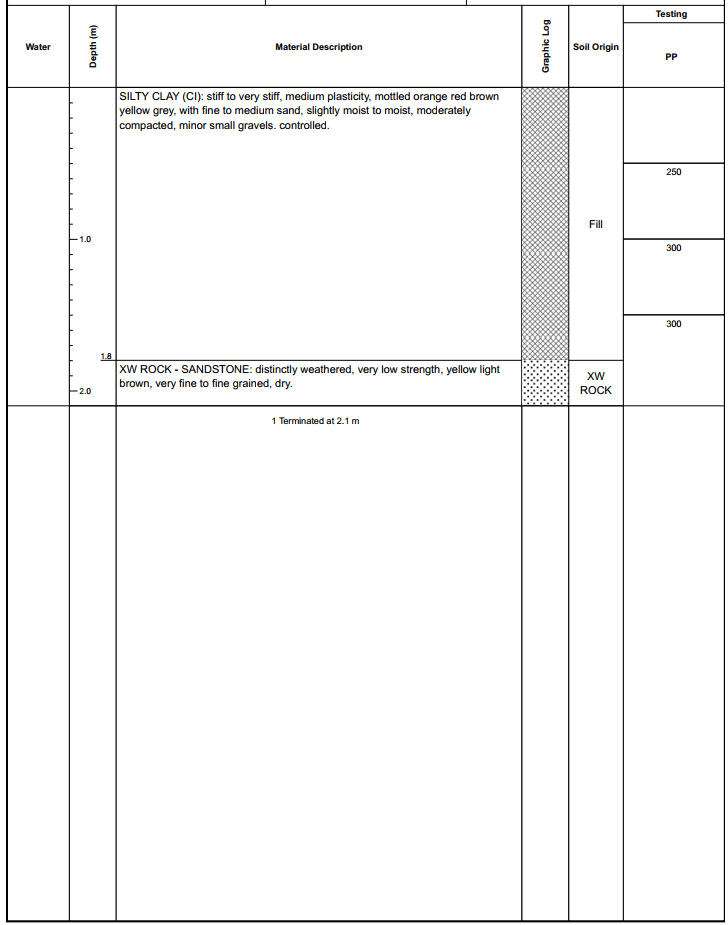
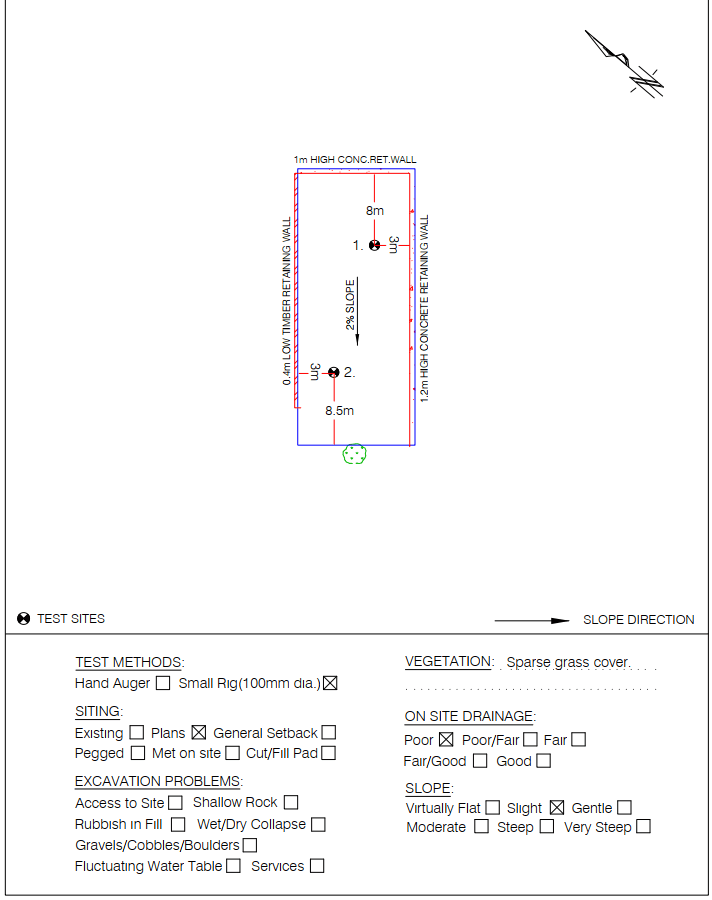
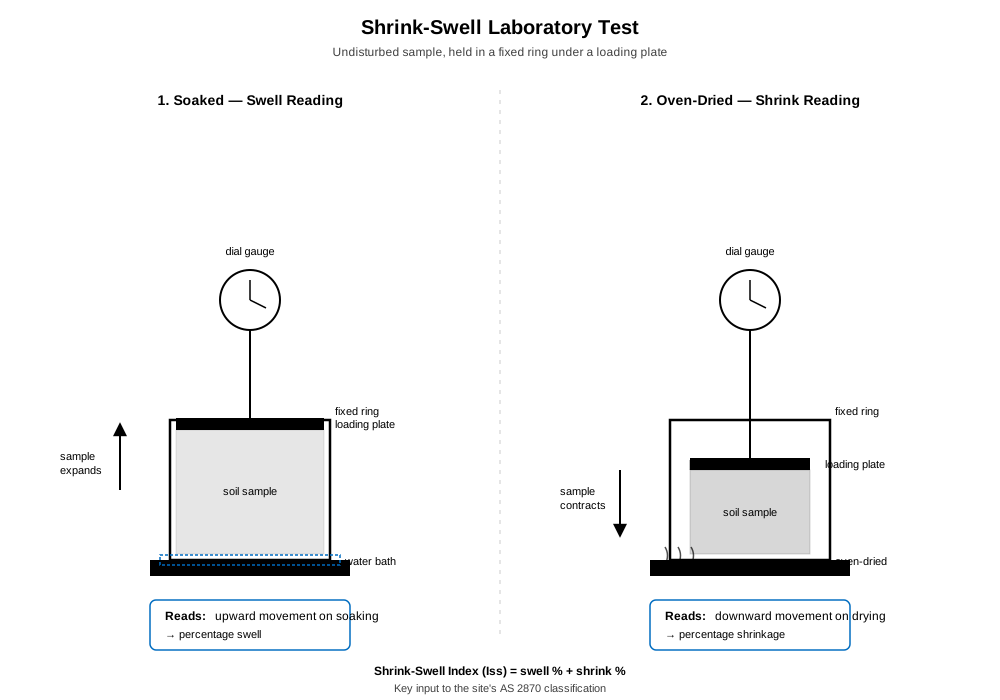
Site classification isn't a separate test of its own — it's the result of the soil investigation. Once boreholes are drilled and DCP or Pocket Penetrometer readings are taken across the site, the collected soil samples go to a laboratory for reactivity testing, most importantly a shrink-swell (reactivity) index.
That lab data, combined with the on-site readings — soil type at each depth, moisture conditions, and any fill or uneven ground — is assessed against AS 2870 to determine which class the site falls into. The class then sets the minimum design requirements your engineer works to for the footing or slab, from a straightforward Class A slab through to a fully engineered Class P solution.
Soil vs Site Classification
Sites are classified based on expected ground movement from soil moisture changes.
Class A
Sand or rock sites with minimal movement.
Class S
Slightly reactive clay, minor movement.
Class M
Moderately reactive clay or silt, moderate movement.
Class H1
Highly reactive clay, significant movement.
Class H2
Very highly reactive clay, large movement.
Class E
Extremely reactive sites, very high movement.
Class P
Problem sites with fill, low bearing capacity, or other site constraints requiring special engineering.
SNG Engineer's site classification reports provide clear, reliable information to support safe, cost-effective, and compliant foundation design, helping Brisbane homeowners and builders make informed construction decisions.
Frequently Asked Questions
What site class is most common in Brisbane?
Brisbane's clay-heavy soils mean Class M and Class H (H1/H2) sites are common across much of the region, though it varies significantly block to block — the only way to know your site's actual class is a proper investigation, not a neighbour's report or a suburb-wide assumption.
Can a site's classification change over time?
The classification itself reflects the soil conditions at the time of testing, which don't typically change — but site conditions like drainage, nearby tree removal, or added fill can affect how the soil behaves. A classification report is generally tied to a specific project rather than reused indefinitely.
Do I need a new site classification for an extension?
If you don't already have a current classification report for the site, yes — the extension's footing design still needs to be matched to the soil's actual reactivity, the same as a new build.
What's the difference between Class M and Class H?
Both are reactive clay classes, but Class H sites (split into H1 and H2) have higher expected ground movement than Class M, meaning stiffer, more heavily engineered footings are typically required. See the class table above for the full range from Class A through Class P.
Is Class P always a bad result?
Class P means the site has a constraint — fill, low bearing capacity, or similar — that needs special engineering, not that it can't be built on. Most Class P sites are built on successfully every day in Brisbane; it just means the footing design needs more attention than a standard site.